
 Call Us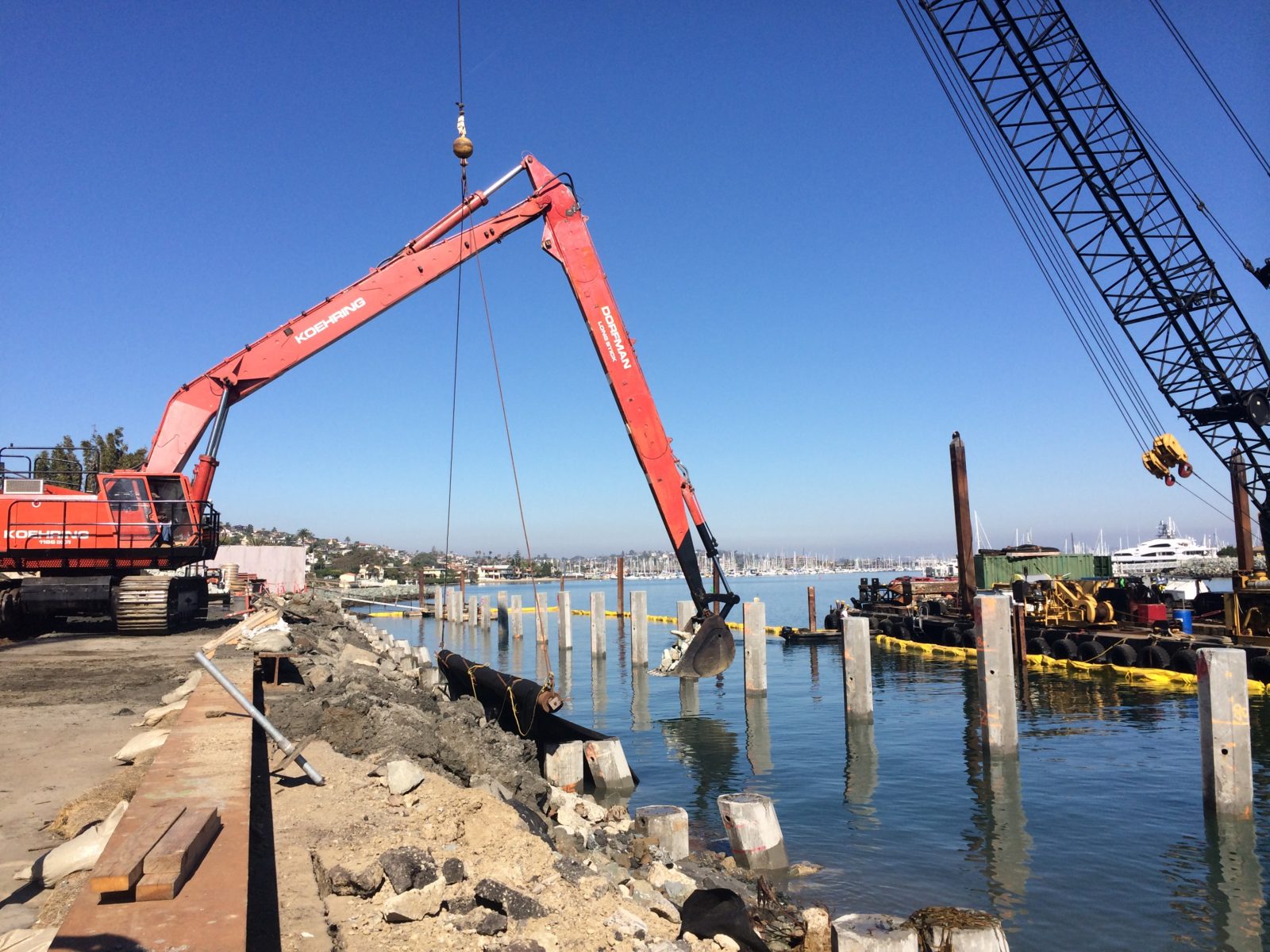
Waterfront construction is not simply land-based construction performed next to the water. Tides, limited access, soft or contaminated sediments, active vessel traffic, environmental restrictions, and saltwater exposure can affect nearly every activity—from mobilization and demolition to pile work, concrete placement, dredging, and final inspection. For public agencies, ports, marinas, and waterfront facility owners, hiring a contractor with proven marine and heavy-civil experience can reduce execution risk and help keep the work safe, compliant, and constructible.
What Makes Marine Construction Different?
Marine projects require crews that understand how to plan and build from barges, floats, temporary platforms, and the water’s edge. The contractor must coordinate equipment stability, access, lifting, fall protection, diving or underwater inspection, tide windows, and the movement of materials between land and floating equipment.
The work also demands an understanding of how marine exposure affects concrete, reinforcing steel, structural steel, timber, coatings, fasteners, and piles. A specialized contractor evaluates not only how to install or repair a component, but how the completed system will perform in a wet, corrosive, and frequently difficult-to-access environment.
Marathon Construction Corporation has spent more than four decades performing heavy civil, marine, and environmental work in Southern California. That experience includes waterfront structural repairs, pile and fender work, seawalls, dredging, concrete rehabilitation, habitat restoration, and projects performed from floating equipment in active coastal environments.
How Does a Specialized Contractor Protect the Environment?
Environmental compliance is often a central part of waterfront construction. Projects may include requirements for turbidity control, spill prevention, water-quality monitoring, protected-species awareness, eelgrass or sensitive-habitat avoidance, sediment management, and limits on when or how work may occur.
An experienced marine contractor incorporates those requirements into the work plan rather than treating them as an afterthought. Depending on the project, controls may include silt curtains, floating equipment containment, debris capture, covered or secured material storage, spill kits, equipment inspections, designated fueling procedures, and careful routing of vessels and barges.
Marathon’s background in both marine construction and environmental restoration is especially valuable on projects where structural work and habitat protection overlap. The same team planning production must also understand permit conditions, biological constraints, and the practical steps required to prevent construction activities from affecting surrounding waters.
Why Does Marine Equipment Experience Matter?
The correct equipment must be matched to water depth, access, reach, lifting requirements, bottom conditions, and the work sequence. Marine construction may require crane barges, sectional barges, work floats, spud barges, long-reach excavators, pile-driving equipment, pumps, dredging equipment, boats, and temporary access systems.
Owning or routinely operating marine equipment is only part of the equation. The contractor must also know how to mobilize it, secure it, inspect it, work within capacity limits, and adjust operations as tides, winds, currents, and site access change.
How Do Permits and Contract Requirements Shape the Work?
Waterfront projects commonly involve multiple agencies and layers of contract requirements. Depending on the location and scope, the owner may be coordinating with the U.S. Army Corps of Engineers, Regional Water Quality Control Board, California Coastal Commission, port or harbor authorities, resource agencies, and local jurisdictions.
The contractor’s role is to understand the approved plans, specifications, permits, environmental commitments, and reporting requirements—and then translate them into field operations. That may include submittals, work plans, activity hazard analyses, environmental protection plans, survey and inspection coordination, daily documentation, and advance notice before restricted activities.
A specialized contractor can also identify constructability conflicts early. For example, a permitted work window may conflict with pile-driving production, a containment system may limit barge movement, or access restrictions may affect the sequence of demolition and replacement. Raising these issues before mobilization can prevent avoidable delay and rework.
How Are Tides, Weather, and Waterfront Access Managed?
Tides and weather directly influence productivity and safety. Water levels can determine whether crews can reach the underside of a wharf, whether a barge can enter a shallow area, whether forms can be installed, and whether concrete, coatings, welding, or demolition can proceed as planned.
Marine superintendents plan around tide tables, wind forecasts, swell, currents, daylight, vessel traffic, and safe access between shore and floating equipment. They also account for overnight mooring, storm preparation, floating debris, and the possibility that conditions may change faster than on a conventional land project.
This planning is especially important on repair projects where the structure remains in service. Work may need to be phased around port operations, public access, tenant activities, navigation, or temporary closures while maintaining a safe and stable work area.
Why Is Material Selection and Installation Quality Critical?
Waterfront structures are exposed to salt, moisture, tidal cycling, abrasion, ultraviolet exposure, impact, and difficult inspection conditions. Materials and installation details must match the design environment and the owner’s service-life expectations.
Common marine repair work may involve reinforced concrete, structural steel, timber, coatings, pile jackets, cathodic protection components, marine-grade fasteners, fender systems, and specialty grouts or repair mortars. Even a high-quality product can fail prematurely if surfaces are not prepared correctly, reinforcing is not properly treated, coatings are applied outside allowable conditions, or connections are installed inaccurately.
Experienced marine crews understand that quality control begins before installation. Material certifications, approved submittals, mockups, pre-activity meetings, inspection hold points, survey control, and documentation all help verify that the completed work matches the contract requirements.
What Should Owners Expect from a Specialized Marine Contractor?
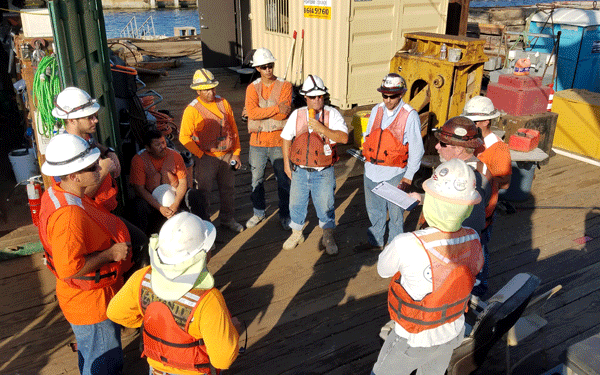
Owners should expect practical preconstruction input, a realistic work sequence, clear identification of access and equipment needs, and a plan for safety, quality, and environmental compliance. They should also expect the contractor to communicate how field conditions could affect cost, schedule, and production.
On repair work, concealed conditions are common. Deterioration may be more extensive than visible from above the waterline, existing dimensions may differ from record drawings, and access may limit inspection until demolition begins. A capable contractor documents these conditions promptly and works with the owner and designer to evaluate the next step.
The goal is not to promise that marine work will be free of surprises. It is to bring the experience, equipment, and management systems needed to recognize risks early, respond responsibly, and maintain control of the work when conditions change.
How Do Inspection and Documentation Support the Project?
Marine construction relies on a combination of visual inspection, survey, testing, photography, underwater inspection, and detailed daily documentation. The exact tools depend on the project and may include divers, remotely operated cameras, sonar, pile-driving records, concrete testing, coating inspection, weld inspection, and as-built surveys.
Good documentation supports acceptance, helps resolve questions, and provides useful information for future maintenance. It is particularly important on public works and federal projects, where the administrative requirements can be as demanding as the physical construction.
Why Is Integrated Marine Project Management Valuable?
Successful waterfront projects require coordination among owners, engineers, inspectors, environmental monitors, subcontractors, equipment operators, craft labor, and facility users. The marine contractor is often responsible for turning those overlapping requirements into a workable daily plan.
Marathon’s heavy-civil and marine background allows its team to approach the work as a complete construction operation—not as a collection of isolated specialty tasks. Demolition, temporary works, earthwork, structural concrete, piles, utilities, dredging, environmental controls, and restoration must be sequenced so each activity supports the next.
For owners, the benefit is a contractor that understands both the waterfront environment and the broader obligations of public infrastructure construction: safety, schedule, documentation, quality, coordination, and responsible stewardship of the site.
Partner with Marathon Construction Corporation for Waterfront Infrastructure
Marathon Construction Corporation is a San Diego-based heavy civil, marine, and environmental contractor with more than 30 years of experience delivering complex public infrastructure and waterfront work. Our teams understand the challenges of building in and around the water—from floating equipment and difficult access to structural repairs, dredging, environmental controls, and detailed public-agency requirements. To discuss an upcoming marine or waterfront project, contact Marathon Construction Corporation.

 Address
 Email Us
 Contact